


Surviving the Wild by Joshua Enyart — Hardcover Survival Book
Surviving the Wild by Joshua Enyart — Hardcover Survival Book
Couldn't load pickup availability
Product Highlights
Product Highlights
Author: Joshua Enyart (Gray Bearded Green Beret)
Publication Date: July 1, 2025
Pages: 430
Topics Covered:
Survival Priorities
Firecraft
Shelter Building
Wild Edibles and Medicinal Plants
Navigation Skills
Preparedness and Emergency Planning
A Wilderness Survival Book Written by Someone Who Has Actually Done It
Most wilderness survival books are written by people who have read a lot of other wilderness survival books. Surviving the Wild is not that book. It was written by Joshua Enyart — a former Special Forces Green Beret, Ranger-qualified soldier, and full-time survival instructor — as a comprehensive field manual for anyone who wants to develop genuine wilderness survival competency, not just familiarity with the theory.
At 430 pages and over 80,000 words with full-color images throughout, this is the most complete single-volume wilderness survival reference Joshua has produced — and substantially more comprehensive than most survival books on the market, the majority of which top out around 40,000 words. Many GB2 course students use it as their primary study reference before and after attending live training. It holds its own as a standalone resource for anyone who can't make it to a live course.
What's Inside
The 8 Survival Priorities — In Order
Survival success depends on doing the right things in the right order. This book is structured around the same 8 Survival Priorities framework Joshua teaches in the field: positive mental attitude, first aid, shelter, fire, signaling, water, food, and navigation. Each priority gets the depth it deserves — not a summary chapter, but a full treatment of the skills, techniques, and decision-making required to execute under pressure.
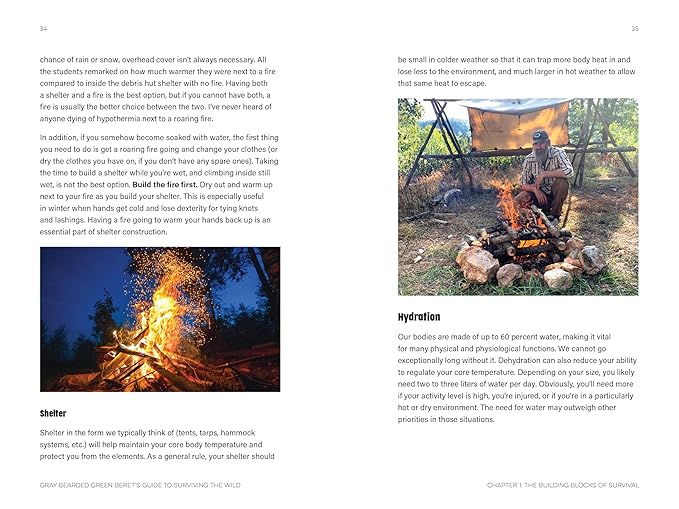
Firecraft
The firecraft section covers the full spectrum of fire-starting methods, tinder selection, fire lay design, and fuel management across a range of environmental conditions. The emphasis is on sequencing and decision-making — understanding what changes when conditions are wet, cold, or both, and how to adapt accordingly. Most fire failures are sequencing failures, not technique failures. This section addresses both.
Shelter Building
Natural debris shelters, tarp configurations, emergency shelters from minimal materials — this section teaches you to assess your environment and build protection against the elements using what's available. Includes regional variations for different terrain and climate types.
Land Navigation
Map reading, compass work, terrain association, and route planning — covered with the same depth Joshua brings to the 4-Day Master Navigator Course. This section alone is worth the book for anyone serious about backcountry navigation.
Wild Edibles and Medicinal Plants
Identification, harvesting, and preparation of wild edibles — with the honest caveat that plant identification requires practice, not just pictures. This section teaches identification methodology alongside specific plant profiles so you develop a transferable skill rather than a memorized list.
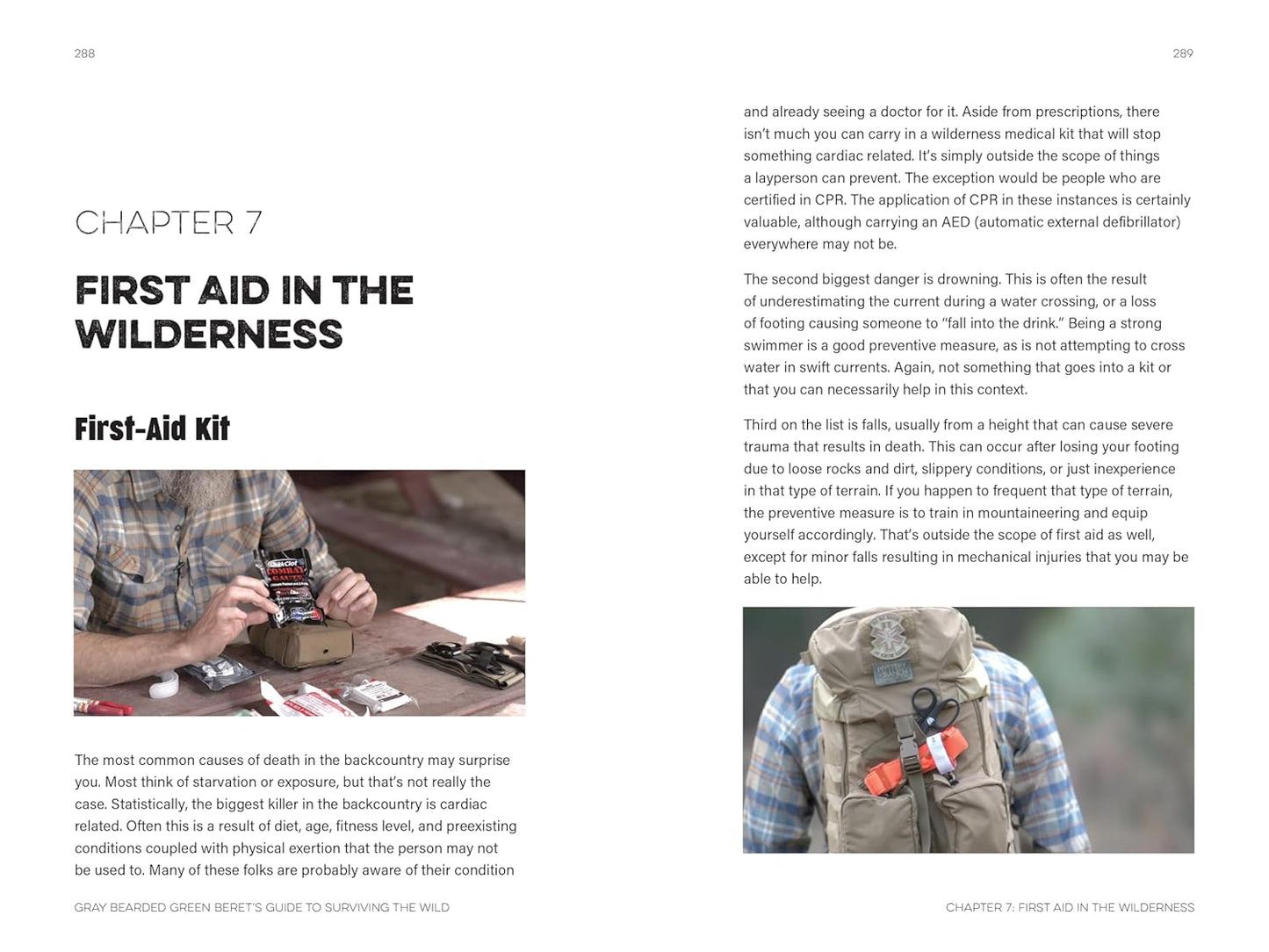
Wilderness First Aid Essentials
Patient assessment, trauma management, environmental emergencies, and improvised treatment when evacuation isn't immediate. Aligned with wilderness medicine principles Joshua integrates across all GB2 training programs.
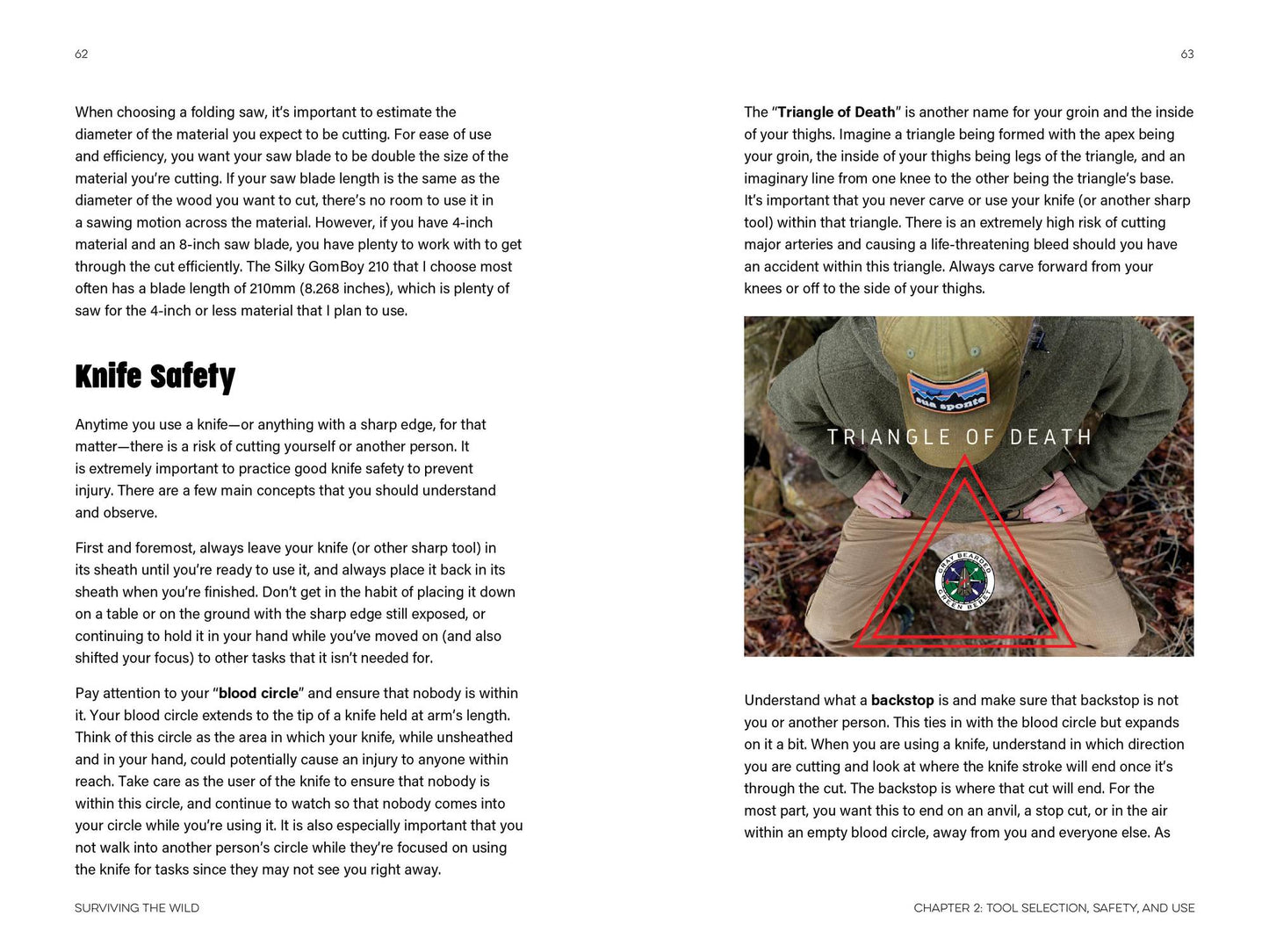
Knots, Tools, and Bushcraft Skills
The practical manual skills that underpin everything else — cordage use, cutting tools, essential knots, and their applications across shelter, trapping, and gear repair scenarios.
Preparedness and Emergency Planning
The bridge between wilderness survival and everyday preparedness — threat assessment, planning frameworks, and the mental models that allow trained people to respond effectively under stress.
Who This Book Is For
This book is built for GB2 course students who want a solid study reference before and after live training, and for self-reliant outdoorsmen who want a comprehensive resource rather than a collection of tips. It works for preppers and preparedness-minded civilians building a serious survival library, military and first responder personnel looking for a civilian-accessible curriculum grounded in operational doctrine, and anyone early in their skills journey who wants one resource that covers the complete picture.
Why This Book Stands Apart
There are hundreds of survival books. The ones worth owning share a common trait: they're written by people whose lives have depended on the skills they're teaching. Joshua's SF career, Ranger training, and decade-plus of professional instruction are embedded in every chapter — not as biography, but as the practical judgment that shapes which techniques make the cut and how they're taught.
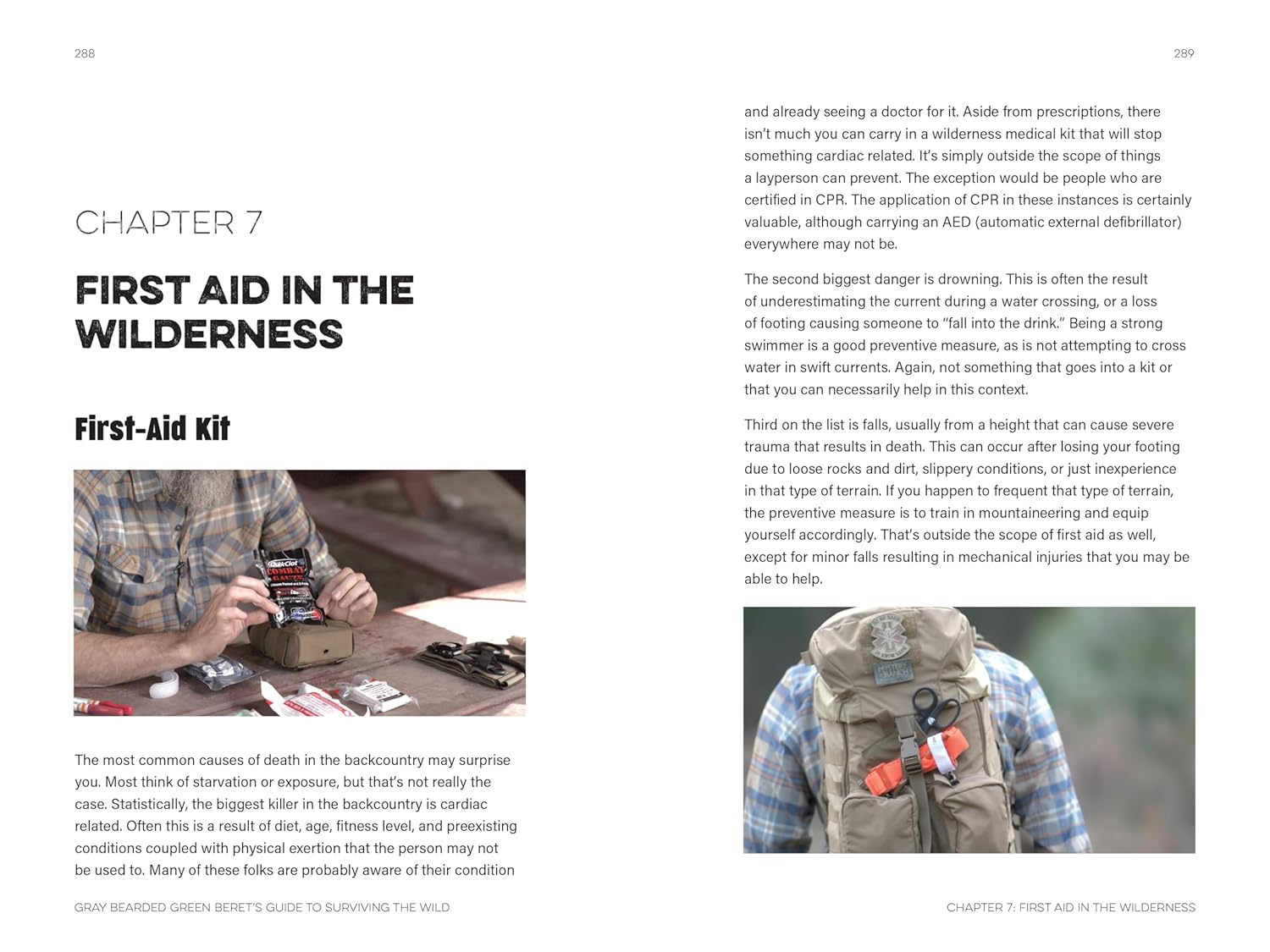
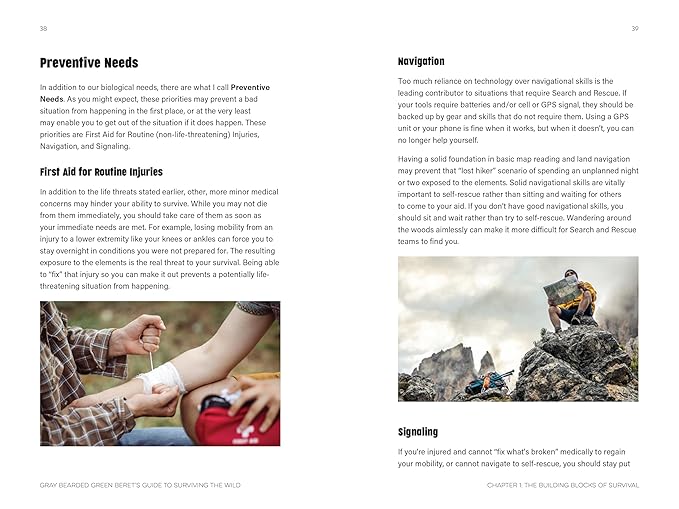
At 430 pages and over 80,000 words, Surviving the Wild is in a different weight class than most survival references. Most books in this category are illustrated summaries — 200 pages or fewer, heavy on diagrams, light on depth. This book goes further. The full-color hardcover format means the topo map illustrations, plant identification photos, fire lay diagrams, and knot sequences are presented with the clarity the material requires.
If you want to explore the skills curriculum before committing to a live course, the Wilderness Survival PDF Series covers the same subject matter in downloadable form. And if you want to see the GB2 System of Training applied in the field before you buy anything, the free content on the GB2 Network is a good place to start.
Book Specifications
Format: Hardcover · Full-color images and graphics throughout
Pages: 430 · Word count: 80,000+
Author: Joshua Enyart — Gray Bearded Green Beret
Topics covered: Survival Priorities · Firecraft · Shelter · Navigation · Wild Edibles · Wilderness First Aid · Knots and Tools · Emergency Preparedness
Frequently Asked Questions
Is this book the required text for the GB2 Wilderness Survival Course?
Surviving the Wild is the recommended student handbook for the GB2 Wilderness Survival Course — it's built around the same framework and prioritization system Joshua teaches in the field. It also stands completely on its own as a self-study resource for anyone who can't attend a live event.
What skill level is this book written for?
It's designed to be genuinely useful at every level — beginner to experienced outdoorsman. The structure builds from foundational principles (mindset, priorities, decision-making) through specific skill execution, so newer students get a clear entry point and experienced readers get the depth and nuance that most survival books skip.
Is this a digital or physical book?
Surviving the Wild is a 430-page full-color hardcover — 80,000 words with professional images and diagrams throughout. That's not an accident. Topo map illustrations, plant identification photos, fire lay diagrams, and knot sequences all require the kind of visual clarity that black-and-white line drawings can't deliver. Most survival books on the market run around 40,000 words with minimal imagery. This one doesn't cut corners on depth or presentation. Ships directly to your door.
Does this book cover land navigation?
Yes — land navigation gets full chapter treatment: map reading, compass work, terrain association, and route planning. It's the same foundational nav content Joshua teaches in his 4-Day Master Navigator Course, adapted for self-study. If you're serious about backcountry navigation, this section alone is worth the book.
Can I use this as a standalone resource if I can't attend a live course?
Absolutely. The book was written specifically to hold its own as a complete self-study resource for people who can't make it to a live event. Every chapter receives full treatment — not a summary — so you're getting the same depth of instruction, just without the field time. If you eventually attend a GB2 course, the book will give you a strong foundation heading in.
How does this compare to other wilderness survival books?
The difference is depth and professional instruction. Surviving the Wild is 80,000 words — roughly double what most survival books publish — with full-color images and diagrams on every topic. More importantly, it was written by someone who has spent three decades developing and refining his own survival systems, not summarizing what other authors have written. Every technique that made the cut, and how it's taught, reflects the same standards Joshua holds in his live training programs.
Share