

Winter Survival Course — 4-Day Cold-Weather Training
Winter Survival Course — 4-Day Cold-Weather Training
Choose Date and Location:
Choose Options:
Couldn't load pickup availability
Winter Survival Course — 4-Day Cold-Weather Field Training
The Gray Bearded Green Beret Winter Survival Course is a 4-day, 3-night immersive field course designed around the specific challenges that cold weather introduces to every survival skill you already know. Fire is harder to start and harder to sustain. Water sources are frozen or compromised. Shelter requirements are more stringent and snow construction techniques are completely different from anything covered in a temperate course. Navigation changes when snow obscures trails, buries landmarks, and makes ice-covered terrain a genuine hazard. Caloric demand increases as your body works harder to maintain core temperature. The Winter Survival Course addresses all of it — not as a review of warm-weather skills with a cold-weather caveat, but as a curriculum built specifically around what winter demands.
Why Winter Is a Different Environment, Not Just a Harder One
The most dangerous thing about cold weather isn't the cold itself — it's the speed at which it compounds bad decisions. In a temperate environment, the consequences of a poor shelter site, a failed fire, or wet clothing are uncomfortable and inconvenient. In winter, the same mistakes are time-critical. Hypothermia can develop in hours. Wet insulation in sub-freezing temperatures loses its ability to protect you faster than most people realize. A failed fire attempt in wind and snow when your hands are already cold is a fundamentally different problem than a failed fire attempt on a dry afternoon in October. The Winter Survival Course is designed to give students real experience with those time pressures and physical challenges in a controlled, supported field environment — so they understand what winter actually demands before they encounter it without a safety net.
The Winter Survival Course is also one of the most accurate tests of survival mindset and psychology on the GB2 training menu. The will to survive — in practical terms — means continuing to provide for your needs when you don't want to. When it's cold, when your hands aren't working right, when the easy decision is to cut a corner on your shelter or skip the second layer of insulation. The winter doesn't forgive that. Mother Nature will teach the lesson herself if you try to shortcut anything, and there is nowhere to hide the way there is in more forgiving locations and seasons. That's what makes this course a genuine test — not just of skills, but of the mindset that determines whether skills get applied when it matters.
What You'll Learn Over Four Days
The course uses the same crawl-walk-run instructional model as every GB2 course. Every skill is introduced with a full demonstration, practiced under supervision, and applied independently in field conditions before advancing. With 4 days and 3 nights in the field, there's more time to build repetitions and more time to encounter the real variability of winter conditions — snow, wind, cold snaps, thaws — that makes this course genuinely different from anything that can be simulated in a classroom.
Cold-Weather Clothing and Layering Systems
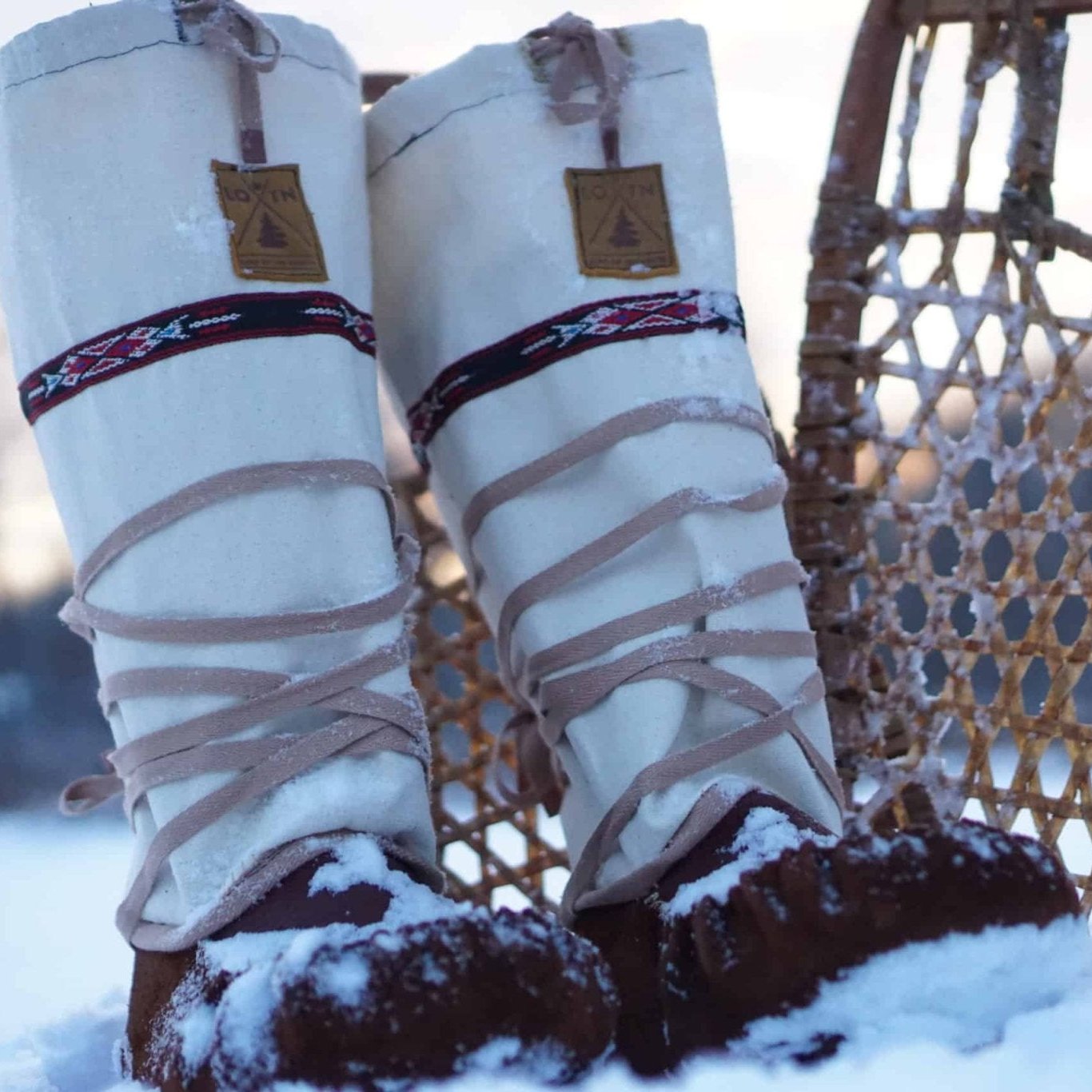
Clothing is the first line of defense against hypothermia, and most people's clothing knowledge stops at "wear layers." The course covers the complete layering system — moisture-wicking base layers that move sweat away from skin, insulating mid-layers that trap dead air regardless of whether they're down or synthetic, durable outer layers, and wind or waterproof shells — with specific attention to what happens when each layer fails. Students evaluate their own gear against the standard taught in the course, which often produces significant changes in how they pack for future cold-weather trips.
Fire Craft in Winter Conditions
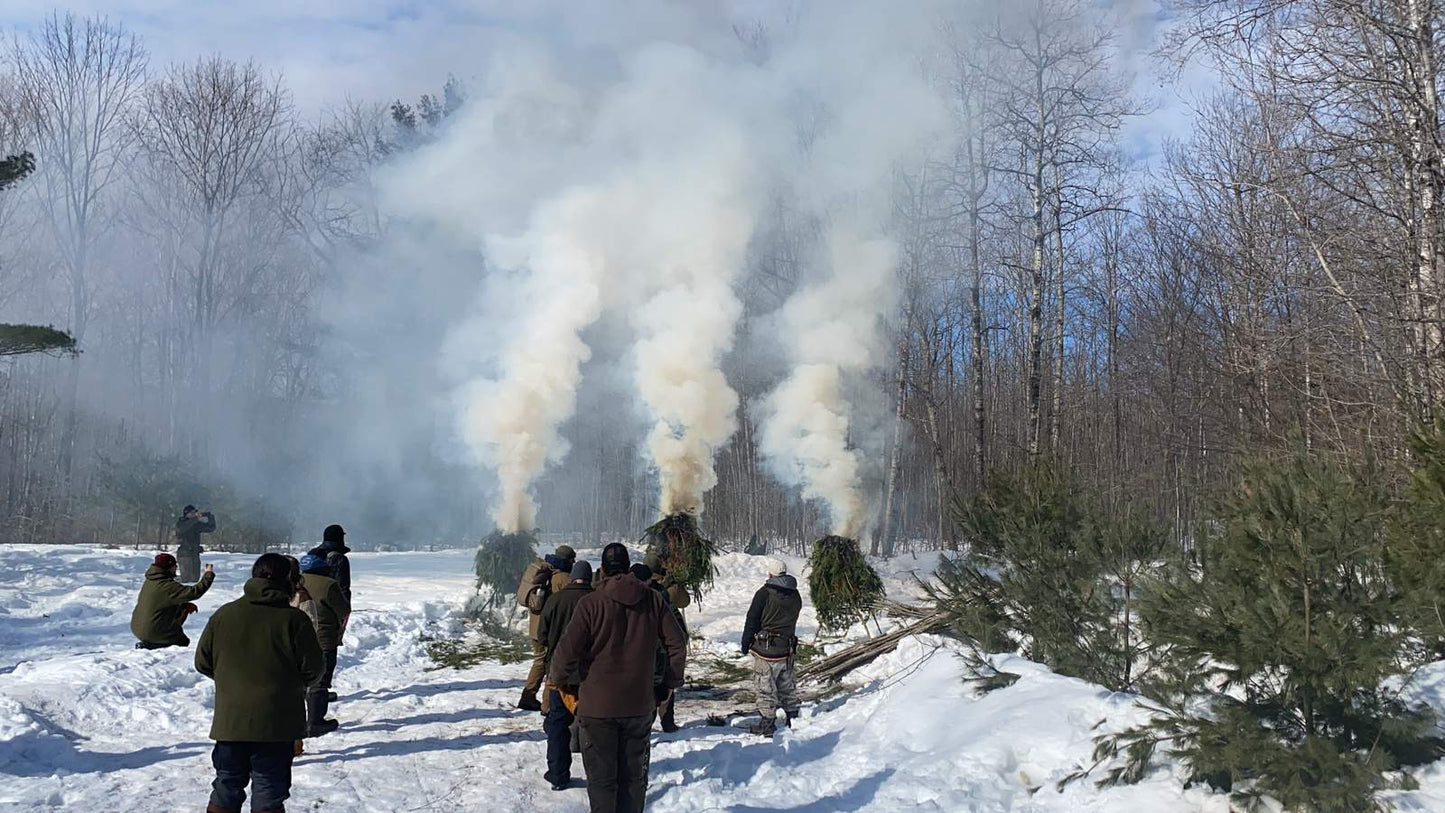
Building fire in winter introduces challenges that simply don't exist in temperate conditions: snow-covered tinder, frozen wood, wind that tears heat away from infant flames, and the awkward fine motor demands of fire-starting when your hands are cold and your dexterity is compromised. The course covers efficient fire lays for cold weather — structures that maximize heat retention and minimize the time between ignition and a self-sustaining fire — along with natural tinder identification and processing in snow-covered environments, platform construction that prevents fires from sinking into snow and self-extinguishing, and fire management for extended warming in a sustained winter camp. Students leave understanding that winter fire is a different skill, not just a harder version of the same one.
Winter Shelter Construction
Snow is an exceptional insulator, which is why snow shelters have been used by people living in cold climates for thousands of years. The course covers snow shelter construction in practical depth — the quinzhee (a snow-mounded shelter excavated to create an insulated chamber), snow trench configurations for emergency shelter, and the modified Mors Kochanski Super Shelter — a hybrid design combining an inner debris layer with an outer vapor barrier that produces exceptional heat retention in extreme cold. Each type has different construction time, different material requirements, and different appropriate conditions. Students build and sleep in their own shelters over the 3-night field component, which means by the third night most students have iterated on their design based on what they learned the previous two nights in the field.
Water Procurement in Frozen Environments
Finding drinkable water when surface water is frozen requires different techniques than temperate water procurement. The course covers identifying unfrozen water sources under ice, safe ice-chopping and extraction methods, snow-to-water conversion and the caloric cost of melting snow with body heat versus fire, and disinfection in cold conditions where chemical treatment times change and filtration can freeze. The course also covers the dehydration risk in winter — cold air is dry air, exertion in insulated clothing produces significant sweat output, and most people in cold environments drink less than they should because they don't feel thirsty. Managing hydration actively in winter is a skill unto itself.
Winter Nutrition and Food Processing
Cold weather dramatically increases caloric demand. Your body is burning energy to maintain core temperature even when you're stationary, which means the caloric math of a wilderness emergency changes significantly in winter. The course covers winter nutrition strategy — the importance of fat intake in cold environments (fat is more calorie-dense — 9 calories per gram versus 4 for carbohydrates — and that caloric density matters when your body is burning through fuel reserves to maintain core temperature), food processing methods that remain viable when everything is frozen, and the early recognition of caloric deficit before it begins to impair decision-making. This section connects directly to the shelter and fire curriculum: understanding why you need more calories informs why building fire and shelter quickly takes priority over foraging.
Navigating Snow and Ice
Winter navigation presents hazards that don't exist in other seasons. Snow buries trails, obscures landmarks, and alters terrain profiles. Frozen lakes and rivers look passable and aren't always. Creek crossings that are trivial in summer are dangerous in winter, and the consequences of a fall through ice are immediate and severe. The course covers snow travel technique, ice assessment and safe crossing decisions, compass use in conditions where GPS battery failure is a real concern, and the navigation adjustments required when your reference points are buried. Students with prior navigation training will find this section adds new dimensions to skills they already have. Students without it should consider the Master Navigator Course as preparation or follow-on training.
Axe and Saw Use in Winter
Axes and saws are winter tools in a way they aren't in other seasons — wood processing requirements increase significantly when snow limits ground fuel availability and fires need to burn hotter and longer to produce meaningful warmth. The course covers full fuel processing from the ground up: tree selection for fuel value and workable size, felling, limbing, topping, bucking, and splitting — the complete sequence from standing timber to fireside fuel. Axe and saw selection for winter use (blade geometry, handle length, weight considerations for cold-weather carry), safe use technique in gloved hands and constrained body mechanics, and tool maintenance in freezing conditions are all covered. Students leave understanding that sustained winter heat production starts with the ability to process the volume of fuel it actually demands.
Knot Work
The Winter Course covers the GB2 Knot Progression™ — Joshua's system for building 15 functional knots from two baseline ties — as a foundation, then adds a small set of specialty knots specific to cold-weather rigging: configurations that account for rope stiffness in freezing temperatures, gloved-hand tie requirements, and the anchoring and tensioning demands of winter camp and shelter construction. These additions are few but purposeful — the kind of knots that don't matter in summer and become essential when everything is frozen and your dexterity is compromised.
Frostbite, Hypothermia, and Cold-Weather First Aid
Cold-weather medical emergencies are covered in the context of recognition and field management. The course addresses the stages of hypothermia and the behavioral changes that accompany each stage — which is critical because impaired judgment in early hypothermia is one of the primary reasons cold-weather survival situations escalate. Frostbite recognition, field treatment decisions (rewarm in field vs. protect and evacuate), and the specific considerations for managing a hypothermic patient in a winter field environment are all covered. Emergency signaling adaptations for low-visibility winter conditions — reduced daylight, obscured ground-to-air signal sites, and equipment challenges in extreme cold — round out the medical section.
Instructor Credentials and Safety Infrastructure
The Winter Survival Course was developed by Joshua Enyart — former Army Ranger and Green Beret with three decades of professional instructor experience in field environments. Joshua's cold-weather instruction background informs every aspect of the curriculum, from the specific clothing standards enforced on arrival to the shelter construction sequences that produce reliable overnight warmth rather than adequate-looking structures that lose heat by midnight.
Every course operates with an on-site Medic Station with appropriate medical equipment, a dedicated medic, and Search and Rescue staff. All instructors hold CPR/AED certification and are Wilderness First Responder certified at minimum. The course is fully insured. In a winter field environment with genuine cold-weather exposure, the safety infrastructure isn't ceremonial — it's the margin that allows the instruction to be real rather than sanitized.
Prerequisites and Who This Course Is For
The Winter Survival Course is listed as an intermediate course. The Wilderness Survival Course is the recommended prerequisite — students who have the 8 Survival Priorities framework and hands-on experience with fire, shelter, and water in temperate conditions will get significantly more out of the winter-specific instruction than students encountering those concepts for the first time in a more demanding environment. The Master Navigator Course is also recommended for students planning winter travel in unfamiliar terrain. Neither is required to register, and students without formal prerequisite training can still enroll and benefit from the course — they should simply be prepared for a steeper learning curve.
The course is appropriate for hunters, backcountry travelers, winter hikers, snowshoers, and anyone who spends time in cold-weather environments and wants genuine competence rather than gear-dependent confidence. It's also a required component of the GB2 Wilderness Survival Certification program for students pursuing that credential.
The other thing this course gives students is a fourth season. Most people write winter off — too cold, too risky, too uncomfortable. Students who complete this course come back from it with the skills and the gear knowledge to move through winter terrain confidently and safely. Trails without crowds. Forest without noise. A version of the outdoors that most people never experience because they don't know how to access it. That's what proper cold-weather training actually unlocks.
How This Course Fits the GB2 Curriculum
The Winter Survival Course sits in the intermediate tier of the GB2 curriculum alongside the Bushcraft Skills Course — both build on the foundational skills of the Wilderness Survival Course and prepare students for the advanced Primitive Survival Course. Students pursuing the full GB2 curriculum path can find details on the multi-course certification on the Wilderness Survival Certification page.
Students who want to study the underlying survival framework before or after attending should look at Joshua's field manual Surviving the Wild — 80,000 words of field-tested survival methodology used by many GB2 students as a primary study reference.
Course Details and Packing List
Duration is 4 days and 3 nights in a field environment. A full packing list covering required and recommended cold-weather gear is available for download: Winter Survival Course Packing List. Reviewing the packing list before registering is strongly recommended — winter gear has significant lead time requirements, and arriving with inadequate clothing is a safety issue, not just a comfort issue.
Frequently Asked Questions
What does the 4-Day Winter Survival Course cover?
The 4-Day Winter Survival Course covers the complete cold-weather survival framework: understanding and preventing hypothermia, frostbite, and cold-related injuries; cold-weather shelter construction; fire starting in wet and frozen conditions; water procurement from snow and ice; cold-weather nutrition and calorie management; navigation with reduced daylight; clothing and layering systems; and the physiological and psychological demands of operating effectively in extreme cold. Every skill is applied in real winter field conditions.
Why is this course 4 days instead of 3?
Cold-weather survival requires additional time to address both the expanded skill set and the physiological reality of working in winter conditions. Day one builds the foundational framework — cold injuries, clothing systems, fire in adverse conditions. Days two through four put those skills to work in the field with progressively demanding field exercises. The additional day ensures students have genuine competency, not just classroom familiarity, before they leave.
What cold-weather threats does the course specifically address?
The course addresses the full spectrum of cold-weather threats: hypothermia (recognition, prevention, and field treatment), frostbite and frostnip, trench foot, dehydration in cold environments (a frequently underestimated risk), caloric deficit and how cold accelerates energy expenditure, and the psychological effects of cold that impair decision-making. Understanding how to recognize and respond to these threats is the most important part of cold-weather survival education.
What gear and clothing do I need?
The packing list is linked in the product description above — review it before registering. Clothing system selection is critical in winter environments and the course addresses layering principles directly. The GB2 gear store carries instructor-vetted cold-weather options if you need guidance. Upon registration you'll also receive the Student Coordination Packet with full logistics and preparation details.
Is previous survival training required before attending?
Prior completion of the 4-Day Wilderness Survival Course or equivalent foundational training is recommended but not strictly required. Students with no prior training will benefit from reviewing the GB2 Wilderness Survival PDF Series before arriving — it provides the conceptual foundation the course builds on. Contact us if you're unsure whether your experience level is appropriate.
How physically demanding is the Winter Survival Course?
This course is as demanding as it gets. You will be outside for 24 hours a day for all 4 days — full immersion in real winter conditions with no retreat indoors. Cold-weather fieldwork requires sustained physical and mental output to stay warm and functional, and the curriculum is built around that reality. Students should arrive in good physical condition and prepared for one of the most challenging experiences the GB2 course catalog offers.
Share


Collapsible content
Important Notes
This course is a field course that requires students to fully immerse themselves in a remote and primitive setting. There will be no access to electricity or running water, and restrooms will likely be limited to portable toilets on-site. Additionally, students will be responsible for constructing their own shelters and will not have access to their vehicles during the course. It is important to be prepared for harsh weather conditions and embrace the challenging field conditions, including cold, rain, wind, and snow. Safety will be a top priority maintained by the course cadre and staff.
It is essential for students to remain dedicated and engaged throughout the course. We will not give up on you if you do not give up on yourself. However, if a student decides not to continue training or does not participate, they will be immediately escorted back to their vehicles and must leave the training venue. Please note that there will be no refunds or credits for the course, and students may not leave and come back at a later time (with some exceptions determined by the cadre).
Upon arrival, ensure that you are physically prepared for the course and have all the required equipment. If you have a preexisting medical condition, please provide a physical from your doctor to GB2 staff for approval to attend the course. If you have any concerns, please contact info@graybeardedgreenberet.com for assistance. Additionally, please disclose any previous hot or cold weather-related injuries (such as heat exhaustion, heat stroke, hypothermia, frostbite, etc.) as they may increase your risk of re-injury.
It is essential that you are eating a high-calorie diet during this course. Cadre will store and provide the food that students will then prepare. This is a high-calorie, whole-food diet consisting of meat, fat, and vegetables. No other food and snacks are allowed with the exception of snacks needed to regulate blood sugar or other medical needs.
However, if you have any dietary restrictions, you must bring your own food and snacks. Cadre will not be responsible for meeting any sort of restrictions including medical, allergies, or religious restrictions. Please inform us at least 30 days out that you will be bringing your own food.
Due to time constraints, there will not be a lunch break. Participants are advised to eat breakfast before the start of training, as it will be a long day before time to prepare dinner is provided.